

The Rhône Valley as a whole is a large wine region that runs for over 200km down through France following the Rhône river, from Lyon to Avignon and beyond. Given the vastly different landscapes from North to South, Rhône Valley wines are split stylistically into two:
The North, from Vienne to Valence, focussing mainly on Syrah for the reds and Viognier, Marsanne and Roussanne for the whites. Here, there’s more focus on wines made from single grape varieties, especially with the reds.
The South, broadly from Montélimar to Avignon and much wider than the North, its focus is more on blends: Grenache, Syrah, Mourvèdre largely for the reds and Grenache Blanc, Roussanne and Marsanne for the whites.
Where does Côtes du Rhône sit here?
Côtes du Rhône is essentially the Rhône Valley’s calling card: the broad, regional expression that gives you a feel for the house style without zooming in too closely. While the appellation technically stretches across the whole valley north to south, most wines lean towards the warmer, sun-soaked character of the south, built on generous blends rather than single varietal wines or single sites. The real step up comes with the named ‘crus’, places like Hermitage in the north or Châteauneuf-du-Pape in the south however, which are not Côtes du Rhône at all, but standalone appellations. These wines are more specific, more structured and often more age-worthy, expressing individual vineyards and terroirs rather than a broader regional style. More on those another time.
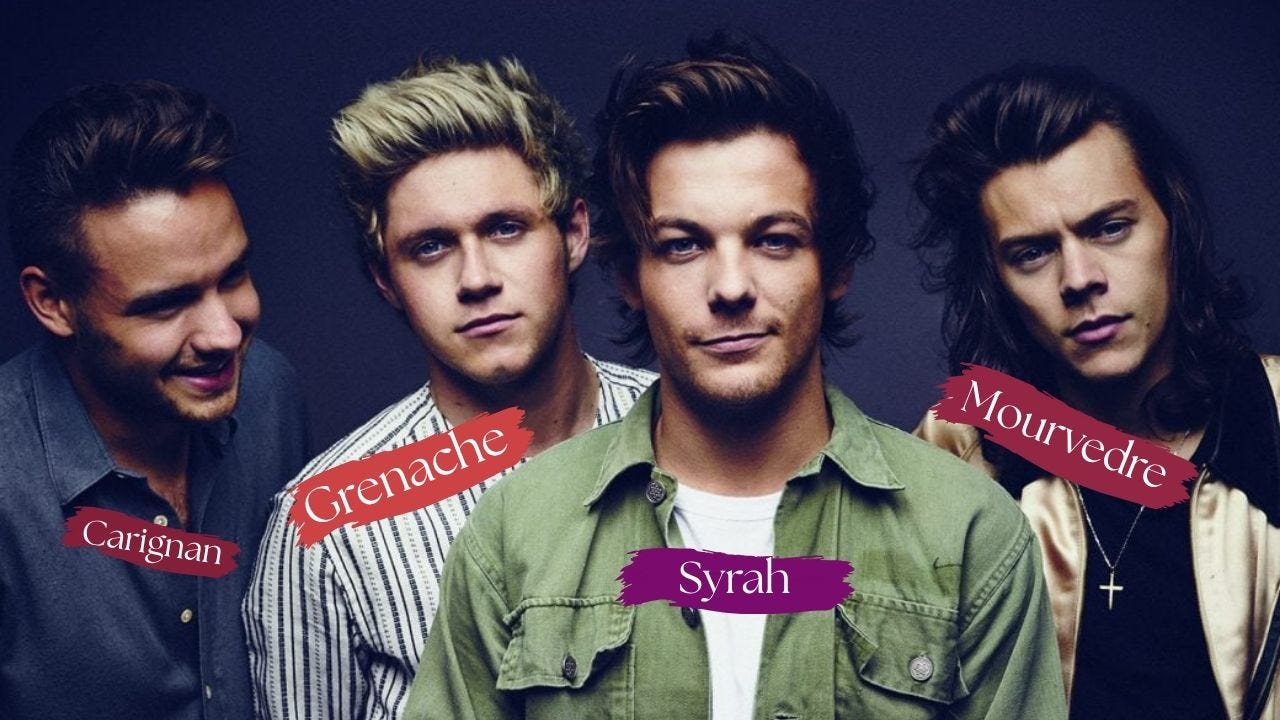
The Key Rhône Grapes (for the BOY BAND of wine styles!)
The star grapes of the Rhône Valley are Syrah, Grenache and Mourvèdre for the reds and Viognier, Roussanne and Marsanne for the whites. In the North, the reds are dominated by smoky, savoury Syrah, whereas in the South, wines are usually blends, led by juicy Grenache, then Syrah and Mourvèdre, though there are several other red and white grapes permitted.
Put another way, you could look at these Rhône blends a bit like a boy band, where each key member has been carefully chosen for their particular qualities (and there may be some backing singers on certain tracks). Grenache comes first: the cute, approachable one. Think homemade strawberry jam dripping from a liquorice spoon. Syrah comes next: he’s the complex, brooding type who probably writes all the lyrics. Think of grilled meat with fresh herbs, pepper and violets. Mourvèdre is the party animal of the group. He’s a Pepperami in liquid form: full-on and full-bodied, juicy, unsubtle and savoury but instantly appealing!
Côtes du Rhône Wines: The Hierarchy
Côtes du Rhône AOC: This first level is the largest and covers the whole of the Rhône Valley as I mentioned, though around 90% of production comes from the South. It produces almost as much wine as Bordeaux and is focussed on reds, though there are also whites and rosés (still a relatively small share, roughly 10-15% combined depending on the vintage). “Côte” means ‘slope’, referring to vineyards planted on hillsides rather than directly on the riverbanks.
Côtes du Rhône Villages AOC: While basic Côtes du Rhône can be sourced from across the entire Rhône Valley (with a heavy southern bias), ‘Villages’ wines must come from a more tightly defined selection of communes, largely in the Southern Rhône, where soils, exposure and vine age tend to deliver greater concentration and character. The rules are stricter too, particularly around yields and minimum alcohol levels, resulting in more structured, expressive wines. Production is still dominated by reds (around 85–90%), with whites and rosés making up a much smaller share. In the glass, you’ll generally find a step up in intensity: riper fruit, more depth and a touch more polish - a bit like the band, but now playing a slightly bigger stage with better sound.
Côtes du Rhône Villages ‘Crus’ (+ named village) AOC: A step above the straight ‘villages’ level are the Côtes du Rhône Villages wines with a named village on the label. Think places like Séguret or Visan, where quality and identity tighten further. These wines must come not just from the wider Villages zone, but from specific recognised communes with consistently strong track records. Rules are stricter again, particularly around yields, ripeness and blending, and in many cases the grapes must be grown within the boundaries of that named village. The result is an even more defined expression of place, with greater depth, structure and ageing potential - usually combined with a high price tag. Production remains heavily focused on reds, with whites and rosés still in the minority. In the glass, these wines tend to feel more composed and characterful, like the band starting to develop a signature sound rather than just playing a bigger stage.
Côtes du Rhône Red Wine SIPS SAFARI
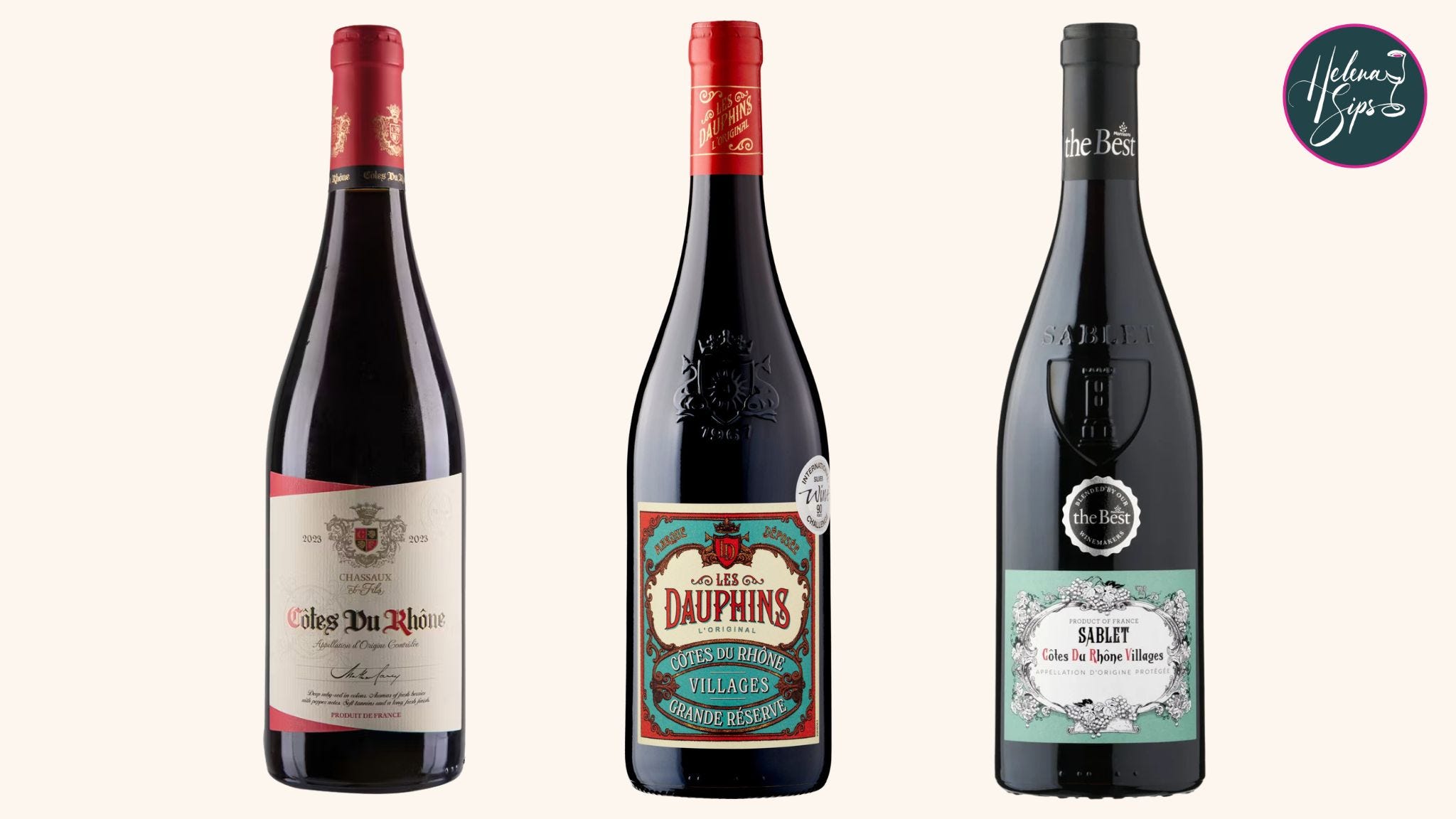
If you want to taste what the three levels mean in the glass, seek out these red wines:
Côtes du Rhône, Chassaux et Fils, £5.29 Aldi
Cheap and very cheerful, this is an easy drinking, juicy example that still has a good amount of classic Côtes du Rhône character. Think earthy strawberry with a touch of spice and a savoury finish. Not the most complex but a bargain for the price
Les Dauphins, Côtes du Rhône Villages RED, £12 (£9 on offer now!) Waitrose
A big step up in quality, this gives you your brooding, dark plum fruit with baking spice, a touch of grilled meat and a hint of herbiness. It’s full-bodied and concentrated but velvety with it. A great all-rounder and versatile with food. (try this midweek recipe for a croque monsieur)
Morrisons The Best Côtes du Rhône Villages ‘‘Sablet’, £9.75 Morrisons
Morrisons have pulled a blinder with this wine, which delivers a cracking example of a Sablet ‘cru’ wine for not much cash at all. Silky smooth and savoury, this has a classic, brooding black bramble fruit profile but with a slick of something more stony and mineral. Definitely a food wine.
Want an easy midweek recipe featuring a Côtes du Rhône Villages red? Click here!