

The US state of Virginia isn’t a new fangled wine thing or a one-note region. Far from it! I’ve been getting to know Virginia wine ahead of their first trip to the London Wine Fair in ten years and I must say, I am in deep. Here’s what you need to know:
Virginia boasts more than 4,000 acres of vineyards spread across ten regions and eight AVAs (“American Viticultural Area”: a designated, officially recognised, US grape-growing region). Mountain ridges, rolling farmland, Atlantic breezes and historic valleys all contribute their own microclimates and distinctive accents to the wines in the glass here. Think of it less on homogeneous region and more like a beautifully eccentric dinner party of wine terroirs.
Fun Fact! Virginia passed a legal mandate forcing citizens to grow wine grapes in 1619. The Jamestown House of Burgesses passed “Acte Twelve,” which legally required every male colonist to plant and maintain at least ten European Vitis vinifera cuttings!
A Brief History of Virginia Wine
Virginia’s wine story stretches all the way back to the earliest European settlers, with Thomas Jefferson himself famously believing the state could become a great wine-producing region, although nature and bad luck had other ideas at the time. Still, while the great Virginian winemaking dream goes back a long way, the modern industry did not truly begin to take shape until the late 1970s.
At a moment when much of the wine world had already written Virginia off as too humid and ambitious, a small band of determined individuals decided otherwise. Some arrived from Europe with generations of wine knowledge in their blood. Others were local farmers and curious entrepreneurs searching for something beyond tobacco fields and dairy herds. Together, they built Virginia wine one hard-earned harvest at a time.

From those early pioneers, growth came quickly. What began as a scattering of wineries expanded to nearly 50 by the mid-1990s. Less than a decade later, that number had doubled again. Today, Virginia is home to almost 300 wineries, with new projects continuing to emerge across the state. These are wines from a region that had to fight to be taken seriously and, increasingly, no longer needs to ask for permission - and you can sense that pioneering spirit in the glass. It is time.
The Grapes and Wine Styles of Virginia
Virginia sits physically AND stylistically in a sweet spot somewhere between Europe and California, exuding ripeness without heaviness and freshness without austerity. You may think you know Chardonnay, Merlot or Cabernet Sauvignon already but Virginia gently taps you on the shoulder and offers a different perspective. These wines often display a restraint and elegance rarely associated with their more opulent West Coast cousins, yet feel another world away from their European counterparts. They are not shouty; they’re persuasive, a bit like the vinous equivalent of speaking impeccable French with the faintest Southern drawl. What’s fascinating though is that Virginia’s greatest success stories are not necessarily the world-famous headline grapes above, but the supporting actors, i.e. the varieties that spent centuries hovering in the wings of European wine culture before unexpectedly finding their starring role across the Atlantic - a bit like what happened with Carmenère in Chile and Malbec in Argentina.

Here are some Virginian wine stars to try:
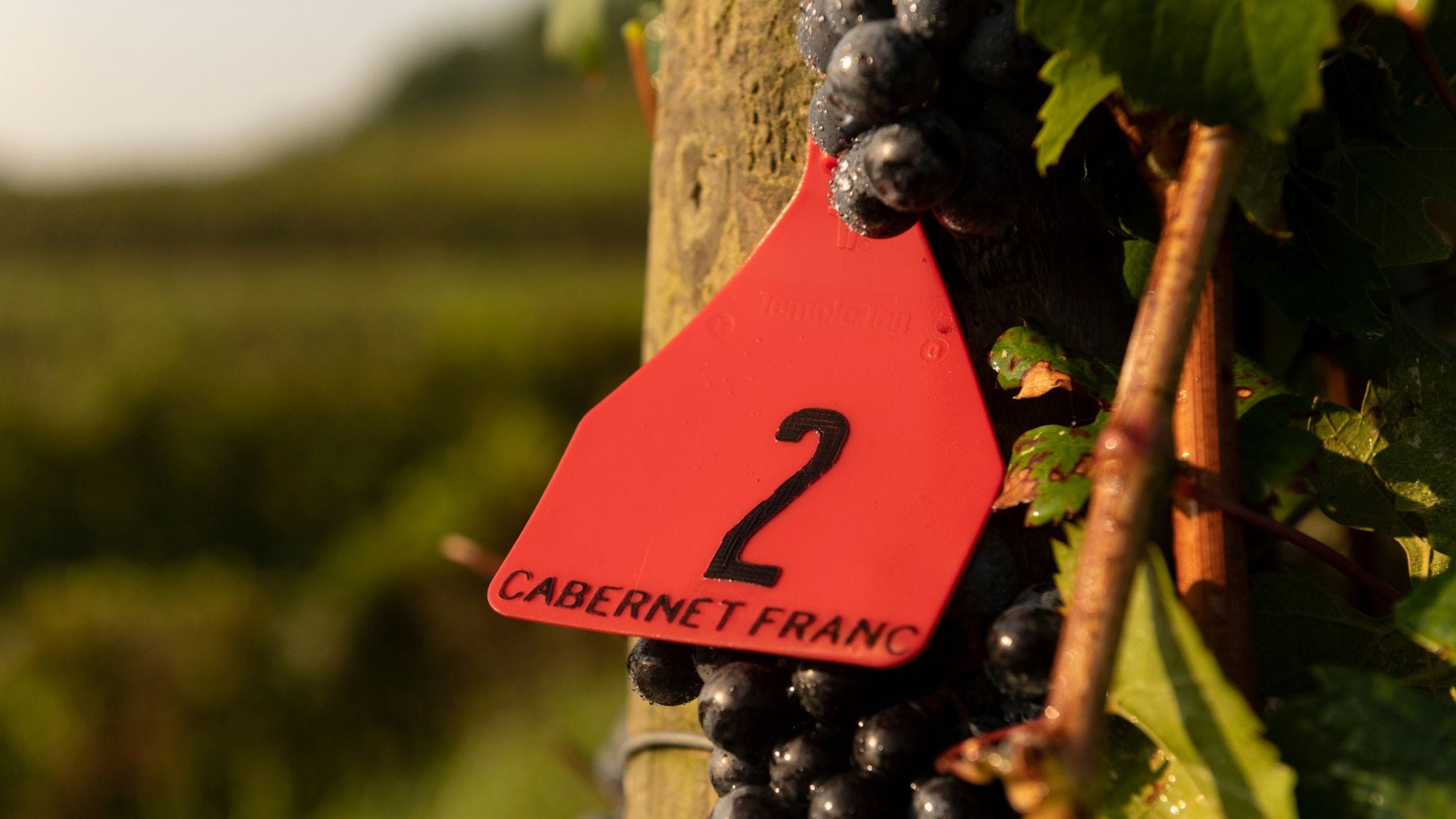
Cabernet Franc: Virginia’s Quiet Charmer
If one grape now defines Virginia’s modern identity, it’s probably Cabernet Franc. Long overshadowed in Europe by louder, more commercially glamorous relatives, here it exhales and becomes fully itself. Virginia Cabernet Franc is elegant rather than bombastic, but never shy.
Viognier: The Perfumed Extrovert
Viognier can sometimes feel a little overdressed elsewhere; all up front perfume and flabby with no substance unless it’s form Condrieu. In Virginia though, it finds remarkable balance. These are aromatic, succulent whites with generosity, but also composure.
Petit Verdot: Supporting Role to Scene-Stealer
In Bordeaux, Petit Verdot is traditionally used as the seasoning rather than the main ingredient. Here however, it thrives in the warmer climate producing deeply coloured, richly textured wines with more polishthan brute force.
Bordeaux Blends: The New World Aristocrats
Some of Virginia’s most acclaimed wines are age-worthy, Bordeaux-style red blends, where Cabernet Sauvignon, Merlot, Cabernet Franc and Petit Verdot come together in endlessly shifting combinations depending on vineyard and vintage. These are seriousness but not self-important!
Norton: America’s Original Grape
Norton is America’s oldest native wine grape, born in Richmond, Virginia itself and it’s now enjoying a quiet revival thanks to a handful of talented producers determined to restore its slightly shaky reputation. A Vitis aestivalis grape variety, it was developed by Dr. Daniel Norton during the 1820s and was once ranked among the best in the world, winning gold medals in Vienna and Paris in the 1870s. Classic Norton characteristics are dark-fruit and a robust structure, unlike anything else in the world. It’s a little wild but gloriously and unapologetically American.
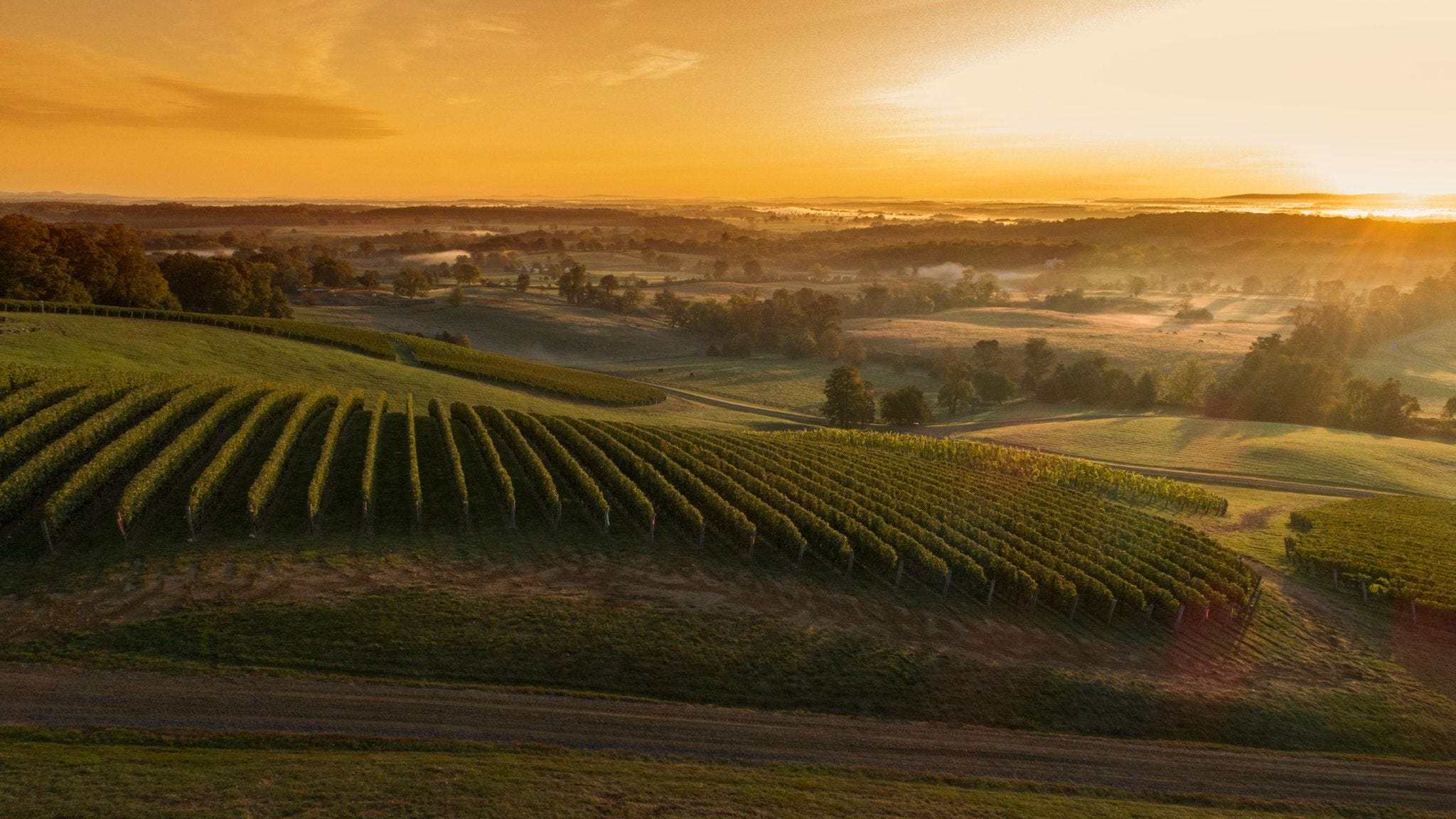
Virginia’s 10 regions and 8 AVA’s (Sub regions)
Looking at these regions, Virginia’s wine scene feels wonderfully difficult to pin down but that is precisely its charm. It’s a state still defining itself and experimenting. But it is also increasingly producing wines that deserve far more attention.
Blue Ridge
Home to the North Fork of Roanoke AVA and Rocky Knob AVA, this mountainous region brings elevation, cooler nights and wines with freshness and aromatic lift. Expect scenery so cinematic it demands a glass of Cabernet Franc in hand.
Central Virginia
The beating heart of Virginia wine country and home to the celebrated Monticello AVA, named after Thomas Jefferson’s estate. This is where Virginia’s modern wine reputation was forged, producing elegant, food-friendly wines with ripeness and restraint.
Chesapeake Bay
The maritime influence is strong here, particularly around the George Washington Birthplace AVA. Coastal breezes help moderate temperatures, creating bright, balanced wines with an easy-going charm.
Eastern Shore
The beautifully windswept Virginia’s Eastern Shore AVA is all salty air, sandy soils and Atlantic influence. It’s one of Virginia’s most distinctive terroirs, producing wines with freshness, finesse and a slightly wild coastal energy.
Hampton Roads
Home to the Virginia Peninsula AVA, this historic coastal area benefits from long growing seasons and moderating sea breezes. The wines here are often lean expressive and generous, yet maintain lovely balance.
Heart of Appalachia
A newer frontier for Virginia wine, where rugged landscapes and high elevations are beginning to reveal serious potential. It’s less polished than some at the moment but all the more thrilling because of it.
Northern Virginia
This increasingly sophisticated corner of the state includes the Middleburg AVA; an area rapidly gaining attention for refined, structured wines and luxury wine tourism where polished tasting rooms meet quietly ambitious winemaking.
Shenandoah Valley
The Shenandoah Valley AVA sits in the rain shadow of the Blue Ridge Mountains, making it one of Virginia’s drier wine regions. The result is wines with concentration, freshness and often a slightly more continental feel than elsewhere in the state.
Southern Virginia
Warm, verdant and increasingly experimental, this region is proving particularly exciting for alternative grape varieties and innovation. There’s a sense that Virginia’s next chapter may well be written here.
Virginia Mountains
High elevations, dramatic diurnal shifts and rugged terrain give this region enormous potential. A great example of how mountain viticulture always asks a little more of growers but then rewards them with wines of real character and precision.
For more information uncluding all the wonderful things to do there on wine tour, go to virginiawine.com.
If you’re at LWF this year to, seek them out at Stand D54! Wineries attending are: