

As we think about toasting another brand new year, here’s a delicious little historical bombshell for you: the English officially invented sparkling wine. Yes, really. Before you spit out your Bollinger in shock however, let me explain.
Picture this: It’s 1615 in England and Admiral Sir Robert Mansell is getting twitchy. Britain’s furnaces are guzzling wood like there’s no tomorrow, turning it into charcoal, so there’s barely any left to build ships. In the age of the all-powerful East India Company, ships equal wealth and Britain desperately needs all its timber for the fleet. Mansell persuaded King James I to issue a Royal Proclamation banning wood and charcoal for furnaces and getting production to use coal instead, which he did - and here’s where it gets interesting.
A Happy Accident
Coal burns at a much hotter temperature than wood, which means British glassmakers suddenly found themselves producing stronger glass bottles that could withstand significantly more pressure. On the back of this, a new ‘shaft and globe’ shaped bottle was developed by Sir Kenelm Digby, which became known as verre Anglais (English glass). Add to this the British wine coopers’ preference for proper cork stoppers rather than the tightly packed rags the French were using (I mean, really?) and you’ve got yourself a new blueprint for fizz-making. The French wouldn’t have access to this technology for decades. Remember, this is around 1615 and the Benedictine monk Dom Pérignon didn’t even start working in the wine cellars at Hautvilliers until 1668.
The English Paper Trail
Enter Christopher Merret, a fellow of the Royal College of Physicians as well as a founding fellow of the Royal Society. He had many interests including natural history, metallurgy and a mild glass obsession and in 1662, he wrote a paper for the Royal Society about ‘ordering’ wines, i.e. how wines were handled, corrected, preserved and made more appealing in the trade. Within this paper, he documented the process of adding sugar to wine to create a second fermentation in the bottle - the part of the process that creates the bubbles or as he put it, to make the wine ‘brisk and sparkling’. This is a full 30 years before the French started deliberately doing this. Merret even coined the term sparkling wine, which was now a possibility thanks to corks and stronger glass. So, sparkling wine now existed - but it was a far cry from the glorious fizz that what we know and love today.
What About Dom Pérignon?
Poor Dom Pérignon has been carrying a reputation he never wanted. Far from inventing Champagne, he was actually trying to stop the secondary fermentation that gives wine bubbles because it kept making his bottles explode. He called this exploding fizz ‘the devil’s wine’ which, while it sounds pretty cool, was not the vibe he was going for. What he did do brilliantly however, was everything else. The man was a genius at blending grapes from different vineyards (what we now call assemblage), perfecting the art of making white wine from black grapes, implementing rigorous vineyard management and yes, eventually embracing those stronger English glass bottles and better cork closures. His meticulous approach to quality transformed Champagne region wines into the prestigious tipple that caught the eye of King Louis XIV. So while Dom Pérignon wasn’t the bubble pioneer, he did lay the groundwork for quality Champagne production. This is why he has been lauded in the Champagne industry and why Moët et Chandon named their top Champagne after him - not because he ‘tasted the stars’. That bit is just great marketing.
A Beautiful, Joint Anglo-French Effort
So, while it’s true that the English provided the crucial technology and technical know-how that made sparkling wine possible, the French took that knowledge, ran with it and created an entire industry, complete with geographical indication, protected production methods and marketing so good that most of the world thinks they invented the whole thing. So next time you pop open a bottle of fizz, remember: you’re drinking a little piece of Anglo-French cooperation, born from a timber shortage and perfected by a monk who thought he was fighting the devil.
Let’s drink to that with two brilliant English Sparkling wines made by famous Champagne houses who have chosen to plant vines in England. Huzzah!
Domaine Evremond Classic Cuvée Edition I NV, £55 Majestic Wines
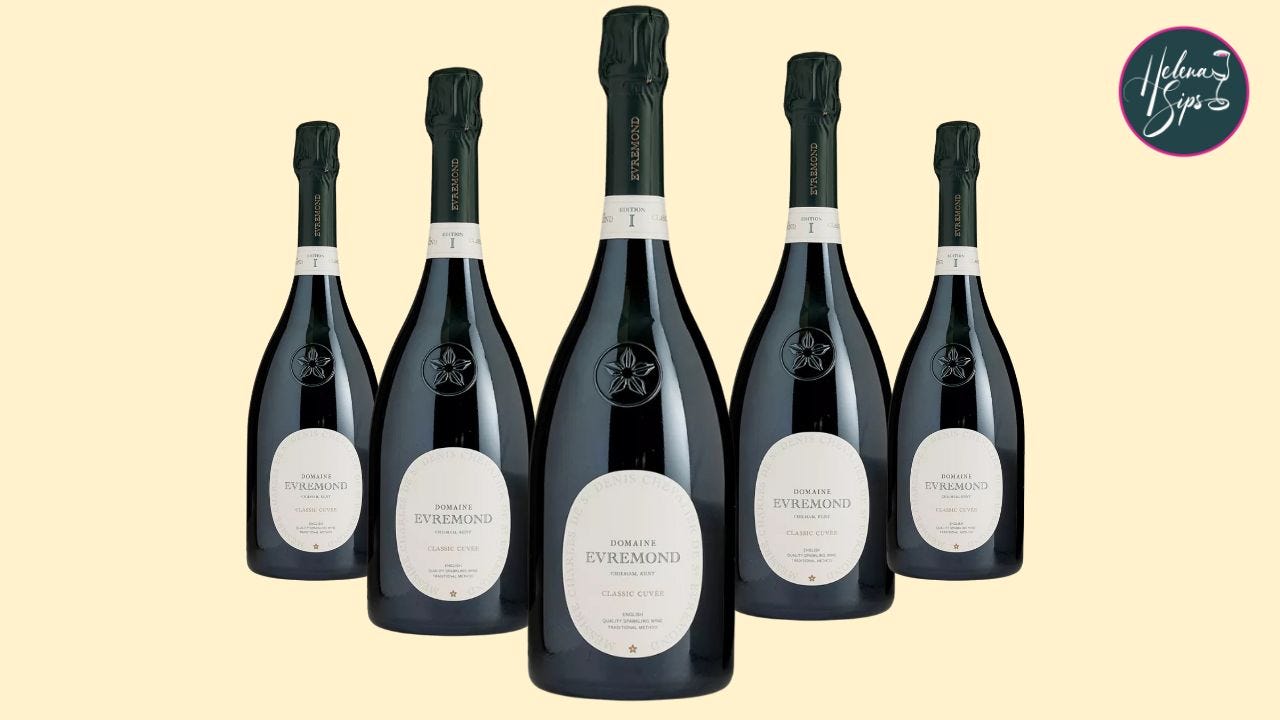
Domaine Evremond is a partnership between Champagne Taittinger and their British friends at Hatch Mansfield and it was the first Champagne house to plant vines in England from scratch back in 2017. Located near the impossibly pretty village of Chilham in Kent, the estate sits on south-facing slopes with the same chalky soil seam as the Champagne region itself. Their debut wine finally arrived in spring 2025: the Classic Cuvée Edition I. It’s a blend of 55% Pinot Noir, 35% Chardonnay and 10% Pinot Meunier across three vintages (2020, 2019, and 2018), fermented in stainless steel with three years of lees ageing. Named after Charles de Saint-Évremond, the 17th-century French epicurean who first championed Champagne in England, this is Anglo-French wine collaboration at its finest. The wine itself? Pure, elegant and with a distinctly English, baked apple note complete with a beautiful mineral backbone that Kent does so well.
Louis Pommery England Brut NV, £30 Tesco, £32 Majestic mix 6
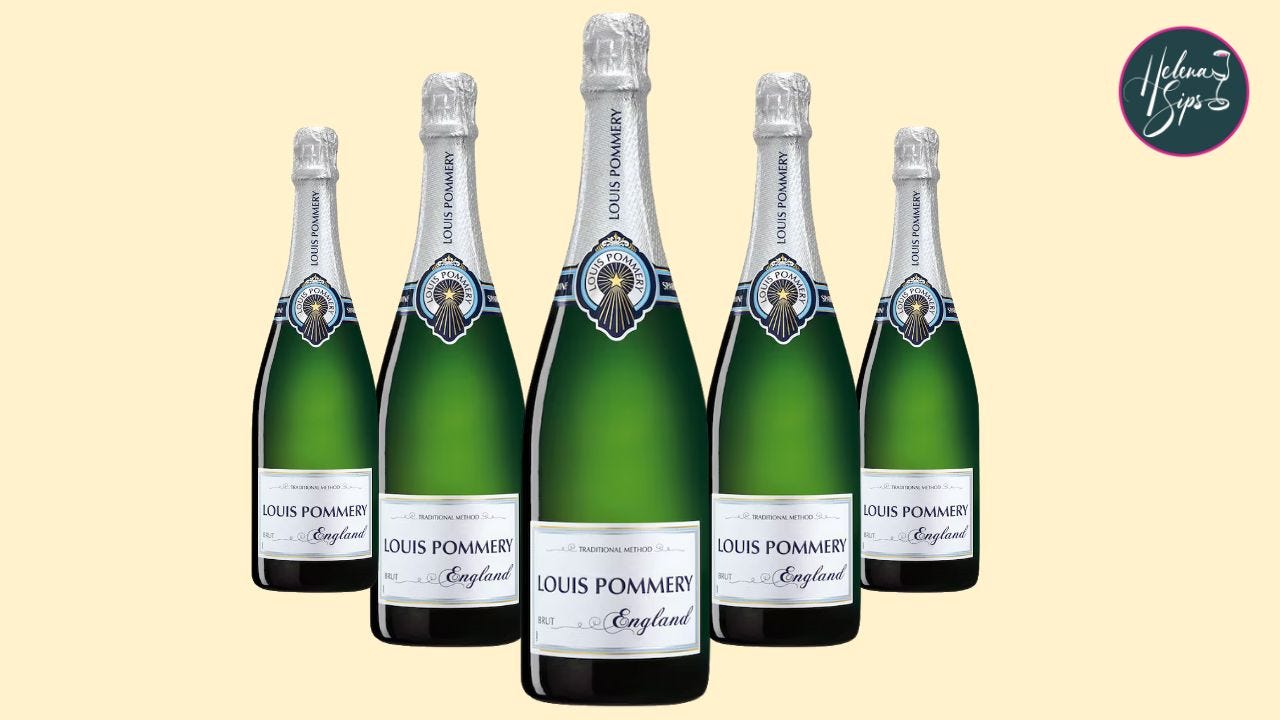
Louis Pommery England was the first commercial English sparkling wine made by a Champagne house available to buy. Madame Pommery herself was an anglophile who pioneered the Brut style of Champagne back in 1874 specifically for the English palate, so there’s a beautiful symmetry to Pommery now making wine on English soil. Their Pinglestone Estate in Hampshire sits on the same vein of chalk that runs through the Champagne region like Evremond in Kent, with vines also planted in 2017. Their first vintage was made with grapes sourced by neighbours in Hampshire and Essex with the first vintage from their own site in 2021. The wine itself is predominantly Chardonnay with a good slug of Pinot Noir and a touch of Pinot Meunier, made in the traditional method by their winemaker Clément Pierlot. What you get is crisp and tangy. Think green apple, lemon zest, brioche and honeycomb, with a distinctive English freshness and purity.
Want to know more about Sir Kenelm Digby? Check out the book The Knight Who Invented Champagne by Stephen Skelton MW.
Wishing you all the best for a happy and healthy 2026!
You didn’t mention Kenelm Digby and his part in the bottle story. Annealing process is critical for strength. Good summary though.