

Prosecco is arguably the most carelessly bought wine on the supermarket shelf, in my opinion. Most people grab whatever’s on offer with no idea that there’s a quality hierarchy hiding in plain sight on the label. The fix is simple: look for the G - and trade up a bit in price. This is what I mean and crucially, why it’s worth it:
DOC vs DOCG
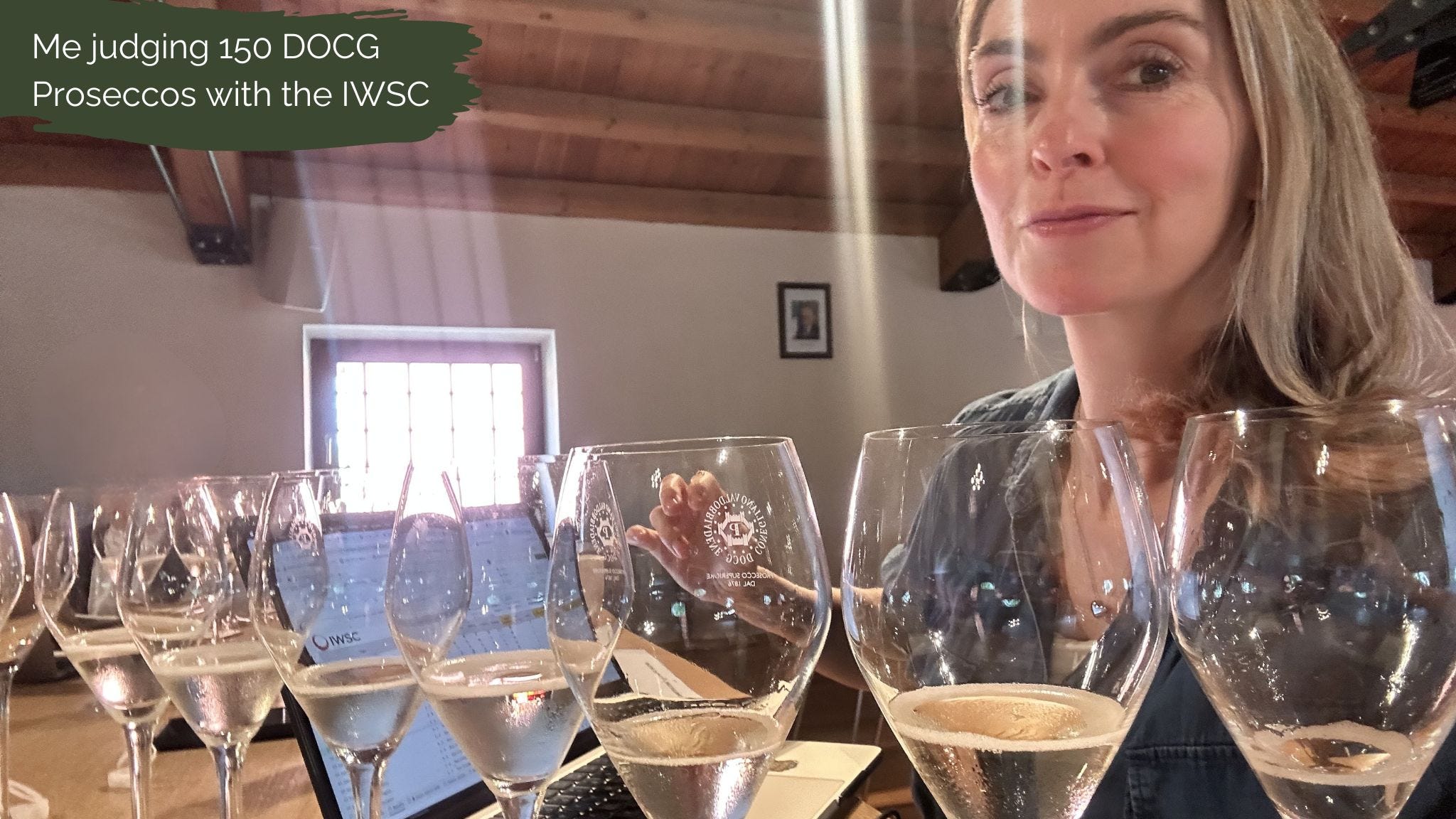
The best Proseccos I have tasted (and last week, I was out in Italy judging A LOT of them blind for an international wine competition, so I should know!), tend to be much drier than most we get in the UK and showcase a gorgeous, subtle complexity with a real sense of place. I’m not talking simple, saccharine, frothy, pear-scented fizz here; I mean verbena, gentian and wild jasmine with notes of rose, white peach, lemon cream and apricot, all freshened up by a slick of salty minerality. I’m talking seriously classy sparkling wines where you can actually tell the difference between them - and they all have one thing in common: The ‘G’.
What’s the ‘G?’
In the UK, around 94% of all the Prosecco we import is of a DOC quality level, which simply assures the area of production and the methods used. Only a tiny sliver, around 6%, of what’s imported is DOCG level, where the ‘G’ stands for ‘Garantita’: ‘guaranteed’. This means extra layers of rules, quality and therefore, prestige. It’s the difference between Prosecco as a category and Prosecco as a place. This is not to throw shade on Prosecco DOC; it has its place, it’s reliable can be excellent in its category. If you’re learning about nuance and heirarchy though, look a little higher up. Literally.
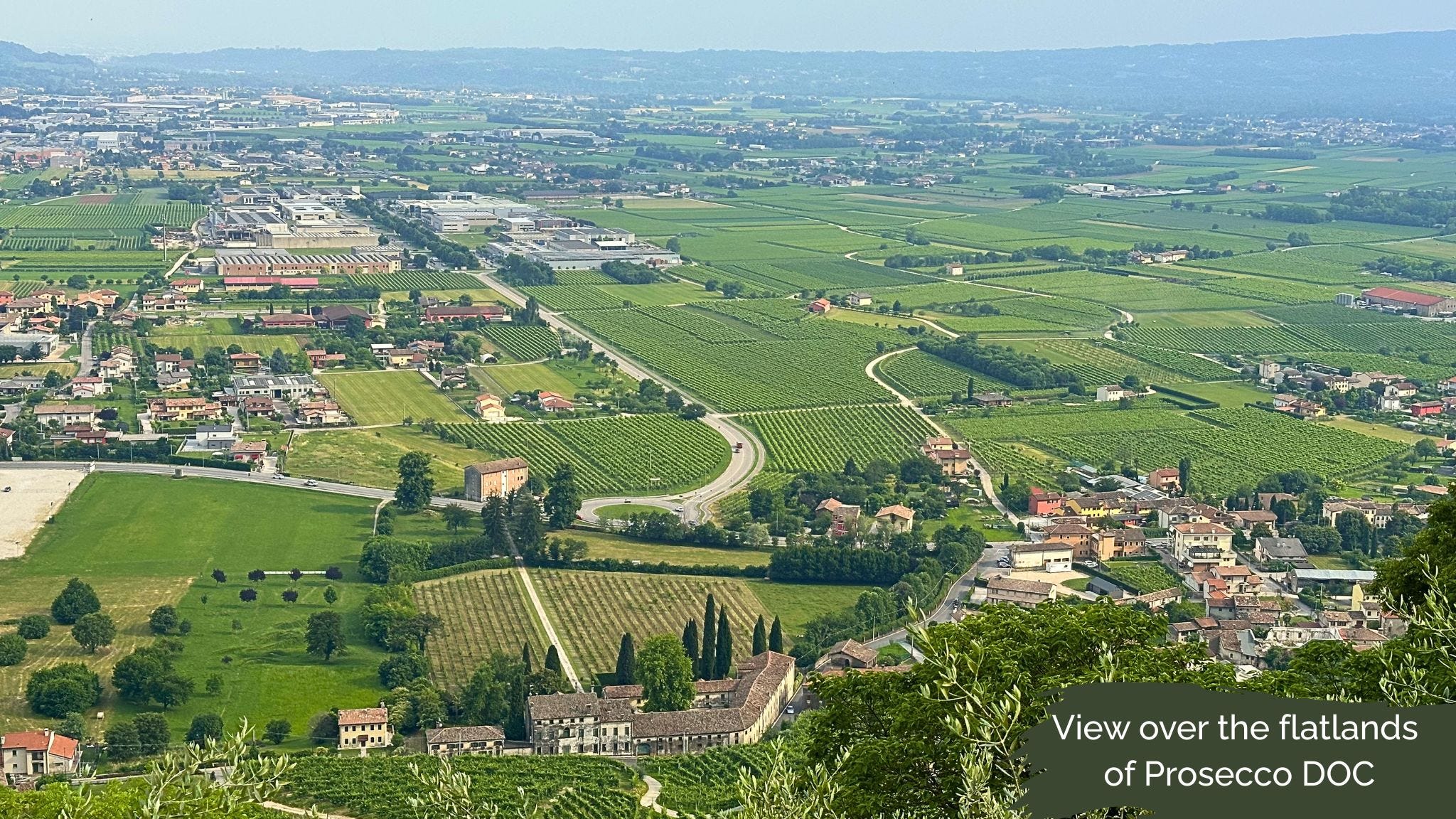
The Prosecco DOC area covers a whopping 89,000 acres of farmland between the Dolomites and the Adriatic and here, the land is largely flat and open with widely spaced rows of vines that make mechanical harvesting easy. This is why yields of grapes and therefore volumes can be so high - rarely a marker of super high quality wine. The tendency with DOC is to make a slightly sweeter style too, which is unhelpfully known as ‘Extra Dry’. Don’t get me started on that. In any case, all these things are why most of us assume that all Prosecco is sweet, simple and cheap as chips, with very little distinction between bottles - even though some are definitely better than others.
Why DOCG wines are ‘Superiore’ (and earn the G!)
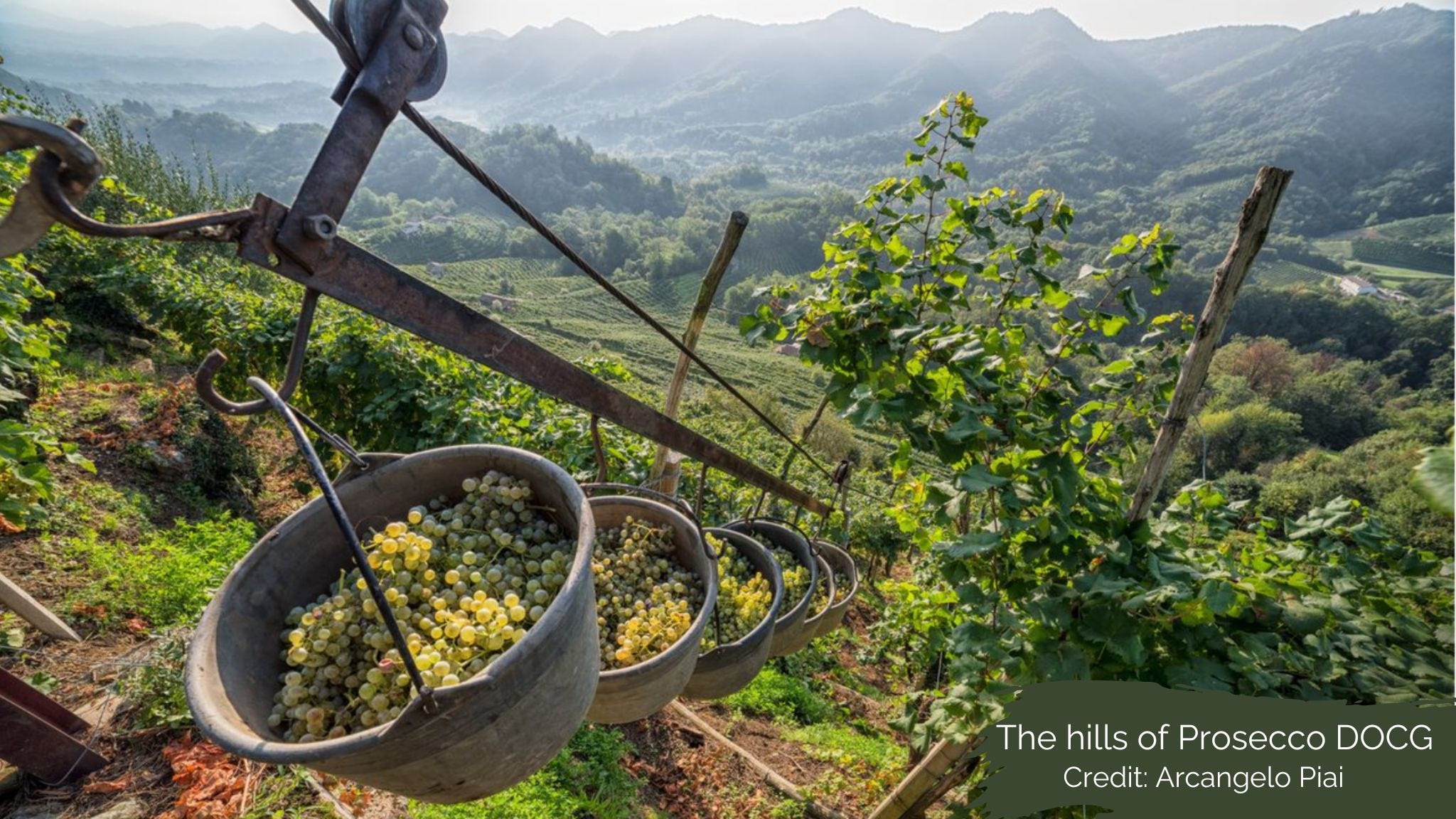
DOCG wines are a big step up in quality and helpfully, labels will usually, though not always, state ‘Superiore’ on them somewhere to make us more aware of their superior status. There are many reasons why they are so good:
Hillside Vineyards: Unlike the vast flatlands of the DOC, here, the steep slopes between the towns of Conegliano and Valdobbiadene are too steep for machines. This means every bunch is hand harvested. Massive quality tick! The same goes for Asolo, the smaller, lesser known DOCG to the southwest.
Tiny Production Zone: Quality beats quantity every time. Conegliano Valdobbiadene covers around 21,500 acres against the DOC’s 89,000. Asolo is small too at just 4,400 acres.
Lower Grape Yields: The slopes naturally limit how much fruit the vines can carry, and less fruit means more flavour packed into what’s left.
Altitude: Vines climbing up to 500 metres above sea level experience cooler nights, which means slower ripening and a freshness that gives these wines a real lift.
The ‘Rive’ System: The Conegliano Valdobbiadene DOCG recognises 43 individually named hillside parcels known as ‘rive’ (pronounced ‘ree-vay’), each with its own soil type and microclimate. This means subtle differences in the glass based on where the grapes were grown. With practice, you can pick out what each rive brings. On the label, you’ll see ‘Rive di…’ and the name, such as ‘Rive di Soligo’. Also, Rive wines MUST be ‘vintage’, i.e. made from grapes grown in one year only.
Often Drier: Serious DOCG producers have been moving toward drier ‘Brut’ and ‘Extra Brut’ styles over the last decade, while basic DOC still leans more heavily on sweeter, Extra Dry and Dry styles, which are handy for flattering less interesting fruit. These drier styles tend to be more nuanced, in my experience. Having said that, it’s worth trying some properly sweet Dry styles (don’t even..!) when they’re a ‘Cartizze’ (see below) or a top producer - preferably both!
A UNESCO site: The Conegliano Valdobbiadene hills became a UNESCO World Heritage Site in 2019 - official recognition of just how special this landscape is.
Cartizze: Within the Conegliano Valdobbiadene DOCG sits a tiny sub-zone called ‘Cartizze’. At just over 100 hectares in size, Cartizze is considered to be the finest hillside within the whole appellation. Wines from here carry the designation ‘Superiore di Cartizze’; the most prestigious DOCG label you can find. The jewel in the crown!
GEEK FACT!
The full name for what the pros are now calling ConVal is Conegliano Valdobbiadene Prosecco Superiore DOCG. It’s quite the mouthful but so satisfying when it rolls off the tongue! Sometimes, you’ll see just ‘Valdobbiadene’ on its own, which usually signals that the producer is emphasising the western, higher altitude end of the zone, closer to Cartizze, but you might also see just ‘Conegliano’. Both are allowed; the former is a hint towards a more prestigious style whereas the latter is more about where the vineyards lie physically.
Your Quality Prosecco Cheatsheet
Here’s a summary of what to look for in order to find a seriously delicious Prosecco:
Look for the G: DOCG
Look for Conegliano Valdobbiadene or Asolo somewhere on the label.
If you see Valdobbiadene alone, it points toward the posher zone near Cartizze.
Look for a Rive di + name if you want a genuine sense of place.
Choose Brut or Extra Brut over Extra Dry or Dry (ironically) for a drier, more nuanced style unless you want a posh wine for cheese or pudding.
Look for Millesimato and/ or a year if you want vintage character.
Choose Cartizze if you are celebrating something special and really see what top notch Prosecco looks like.
Some DOCG Prosecco Wines to Try
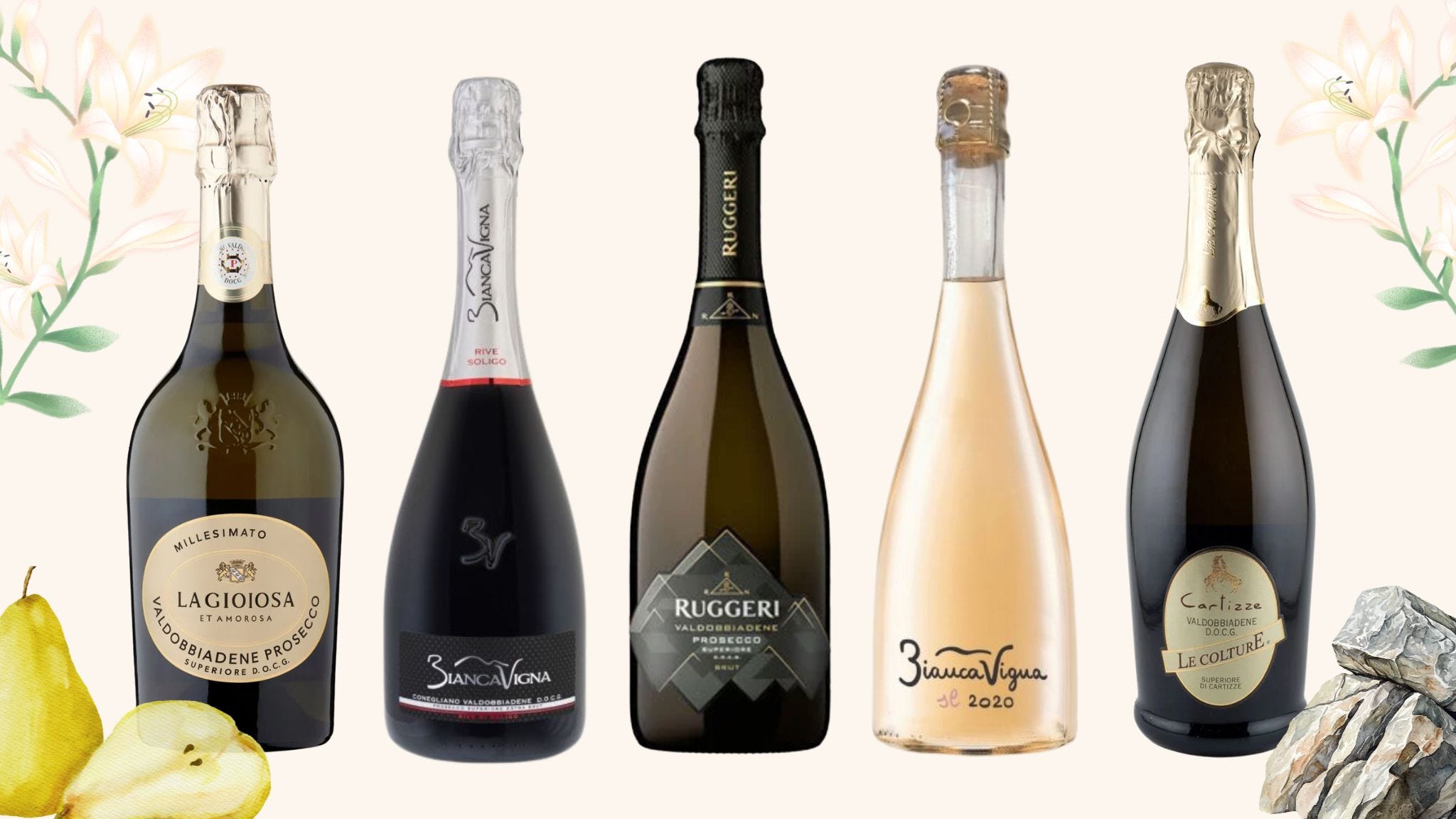
La Gioiosa Brut Prosecco Valdobbiadene DOCG Superiore Millesimato, £14.50 Ocado
A great, easy going example of a vintage DOCG with notes of golden delcicious apples, white peach and jasmine. An Extra Dry style so expect lots of fruit ripeness.
Ruggeri ‘Orizzonti’ Valdobbiadene Prosecco Superiore DOCG Brut NV, £15 (£13.50 mix 6) Majestic
The Ruggeri family go back generations in the area and this DOCG is a good example of a drier ‘Brut’ style with real citrus freshness, though there’s still ripeness there.
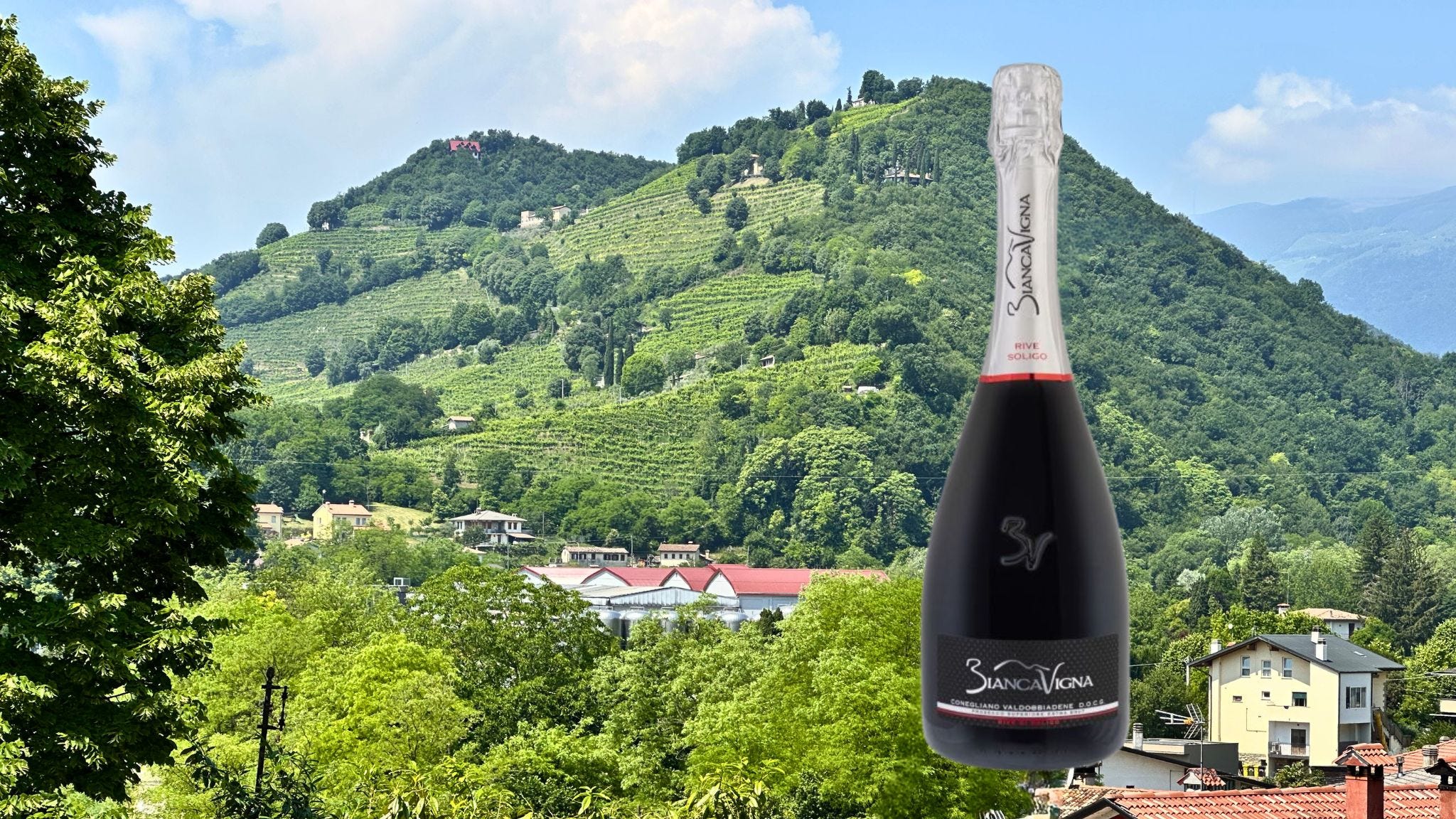
Biancavigna Prosecco DOCG Extra Brut, Rive di Soligo, £21.80 Amathus
One of the driest styles, this vintage, Extra Brut shows the terroir of Soligo beautifully with fine bubbles and notes of acacia, wisteria, white peach and a mineral core.
Biancavigna Prosecco DOCG Brut Nature ‘Sui Lieviti’ 2020, £22.20 Amathus
‘Sui Lieviti’ means ‘on lees’ and this style is essentially Prosecco’s Pét Nat. Naturally cloudy and savoury with notes of peach skin and nuts, this is a textural, foodie wine.
Prosecco Superiore di Cartizze DOCG ‘Le Colture’, £24.50 Corney & Barrow
Cartizze wines suit a Dry style which ironically, is the sweetest - but it’s never cloying here! This is round and ripe with notes of caramelised peach and jasmine, lifted by verbena. It’s perfect with cheese and salty snacks as well as less sugary desserts like tarte tatin.