

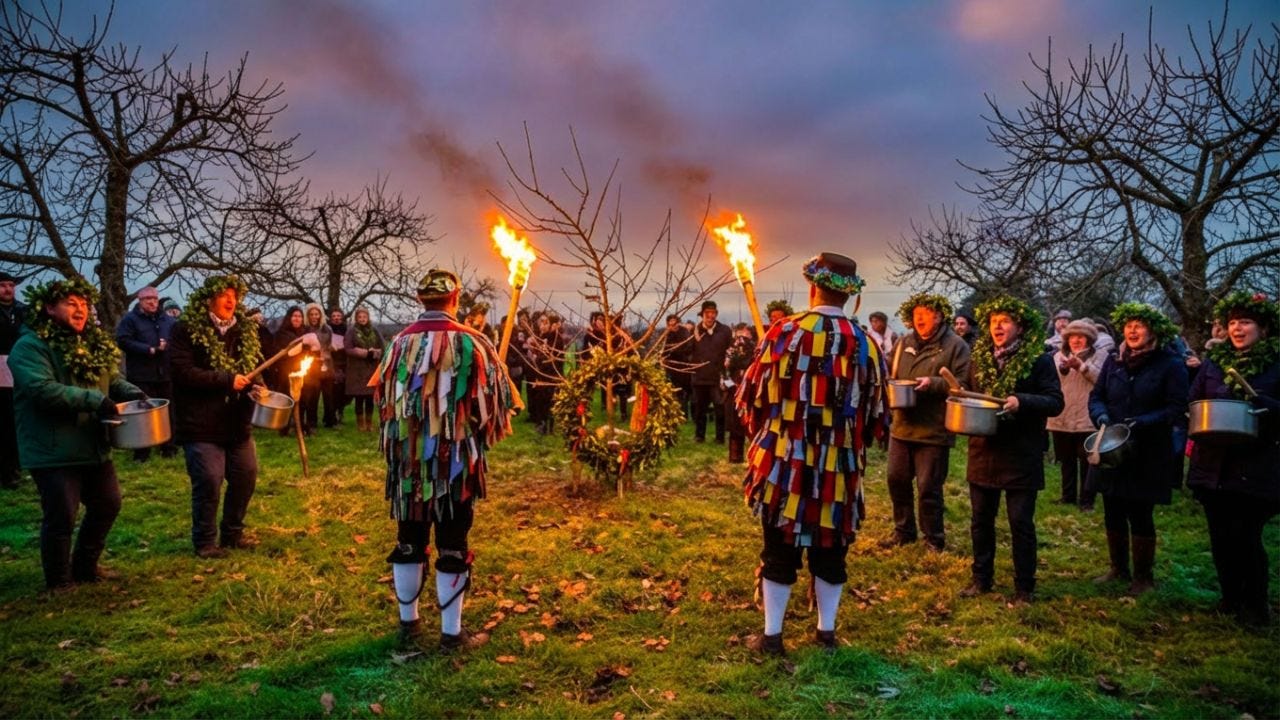
If you’ve never witnessed a crowd of perfectly sensible adults standing in a freezing orchard at night, banging pots and pans whilst absolutely bladdered on mulled cider and singing to trees, then you haven’t truly experienced the magnificent chaos of wassailing. This ancient tradition manages to be simultaneously pagan, practical, completely bonkers and rather beautiful, which is probably why it’s experiencing a proper revival across Britain’s cider counties.
What Does the Word Wassail Mean?
The word itself comes from the Old Norse ves hael and Old English was hál, meaning “be in good health” or “be fortunate.” The traditional response was “drink hael”: drink and be healthy. This evolved into a winter ritual that falls into two camps: house-visiting wassails, where groups went door-to-door singing for food and drink (the precursor to carolling) and orchard wassails, which focused on blessing apple trees to ensure a good harvest. It’s the orchard version that’s having its moment now. Thank goodness.
The Ritual
Wassailing traditionally takes place on Twelfth Night, either the 5th of January or, for those who follow the old Julian calendar (don’t we all?), the 17th of January, charmingly known as “Old Twelvey.” This timing places it firmly in that strange post-Christmas liminal space when we’re all slightly lost, recovering from too much cheese and wondering what on earth to do with ourselves. The answer, apparently, is to go and stand in an orchard in the cold and shout at foliage. And honestly? It works.
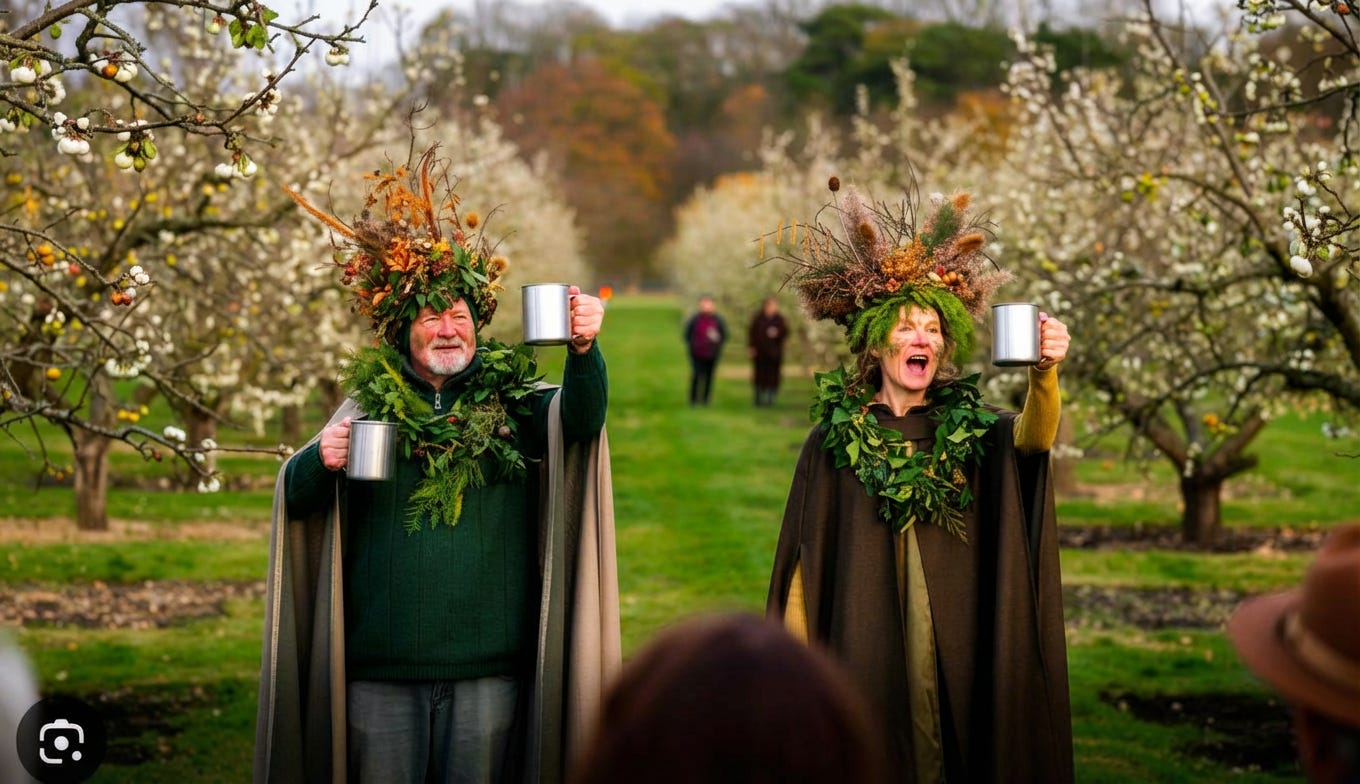
The ritual varies by region but core elements remain consistent. A wassail king and queen lead a procession into the orchard after dark, choosing the oldest or most productive tree. Toast soaked in cider is laid at roots or hung from branches as offerings to tree spirits. More cider pours over the roots whilst everyone gathers and then the noise begins. Banging pots and pans, shouting, singing traditional songs, and sometimes firing shotguns to frighten away malevolent spirits. In Sussex and Kent, this earned the brilliant nickname “Apple Howling,” which tells you everything about the volume involved.
By why? WHY?
The practical reasoning for wassailing is rather lovely. In rural England before reliable water supplies, cider was the everyday drink for agricultural workers, a bit like small beer was back in the Middle Ages for city folk. Farmers provided refreshment for labourers and cider was considerably cheaper than beer since apples grew locally. A good harvest meant affordable cider, which meant the farm could prosper. Therefore, blessing the trees wasn’t just spiritual, it was economic. The Apple Tree Man, a Somerset folk spirit inhabiting the oldest tree, was believed to hold the orchard’s fertility. Whether you believe in tree spirits or not, there’s something moving about that reciprocity: honour the trees, and the trees will provide.
The communal aspect matters enormously. The wassail bowl would be passed person to person, reinforcing shared purpose and collective hope. These days, wassails might sell out within days, with people travelling from London to Somerset orchards. You’ll find bonfires, Morris dancers, folk musicians, and often someone leaping through flames. The atmosphere is part historical re-enactment, part community gathering and entirely joyful.
Why We Should Keep Wassailing Alive
Orchards across Britain have been disappearing at an alarming rate, with ancient varieties lost and traditional cider-making knowledge fading. Wassailing creates a reason for communities to gather in these spaces, to value them, to care what happens to them. When people feel connected to an orchard, they’re more likely to protect it, preserve it and even, campaign for it. The ritual isn’t just about ensuring next year’s harvest; it’s about ensuring there’s an orchard at all.
What to Drink at a Wassail?
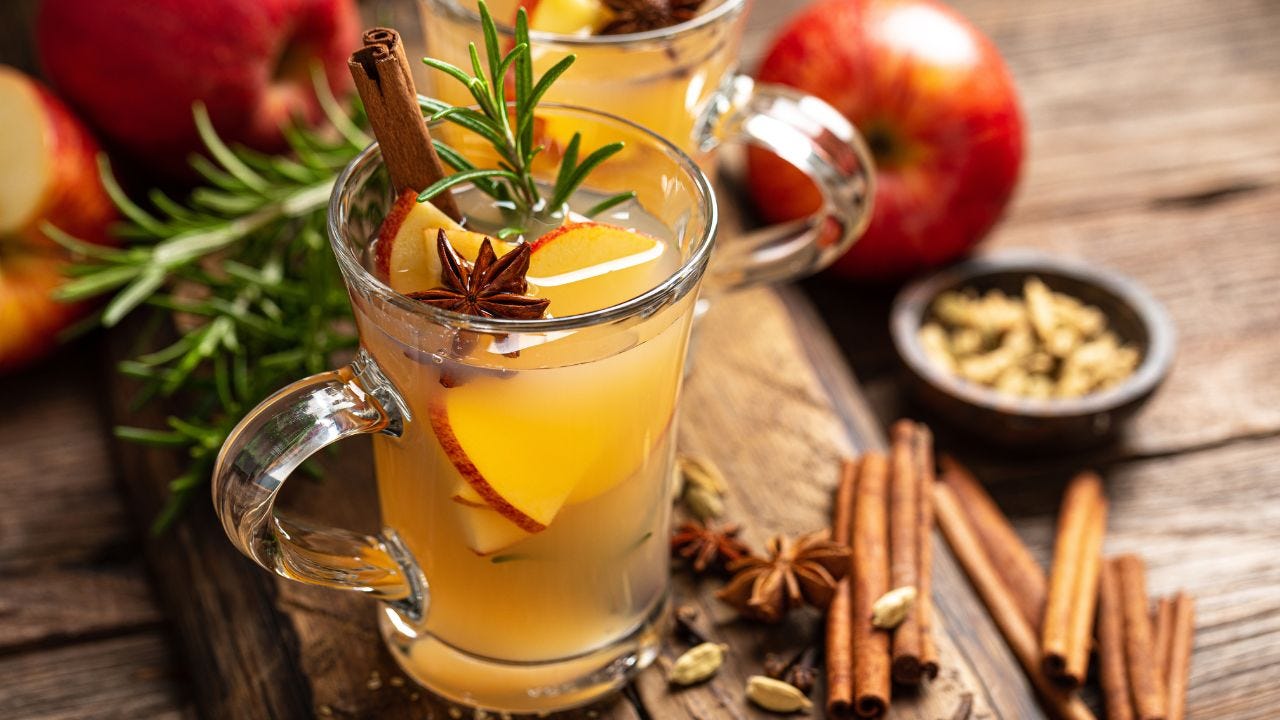
Cider, of course! Traditional ‘wassail’ (the drink is also called this) is mulled cider heated with cinnamon, cloves, nutmeg and ginger, sweetened with honey and sometimes enriched with beaten eggs. Some recipes include floating baked apples or clove-studded oranges. The result is warming, spiced and absolutely perfect for January when your fingers are numb and your voice is hoarse from ‘singing’.
If you want to experience wassailing yourself, January is your window. Check local community orchards, cider producers or organisations like The Orchard Project for events. Or just gather some friends, find a willing apple tree, pour some cider at its roots, hang some toast in its branches and make an unholy racket. The tree spirits and the neighbours might not mind if you skip the shotgun bit though.
What wassailing offers, ultimately, is permission to be ridiculous in service of something meaningful. To stand in the cold and dark, drunk on spiced cider and community spirit, shouting blessings at dormant trees in hope of future abundance. To believe, even just for one night, that our voices and our presence and our attention might actually matter to the natural world around us. And quite frankly, in times like these, we could all use a bit more of that.
Wassail!
Have you been to any good ones? Let us know for next year in the comments below!
Want to know more about all things orchards and cider from an expert? Follow Clare Rull here on Substack. She is re-wilding and regenerating a small orchard in Devon.