

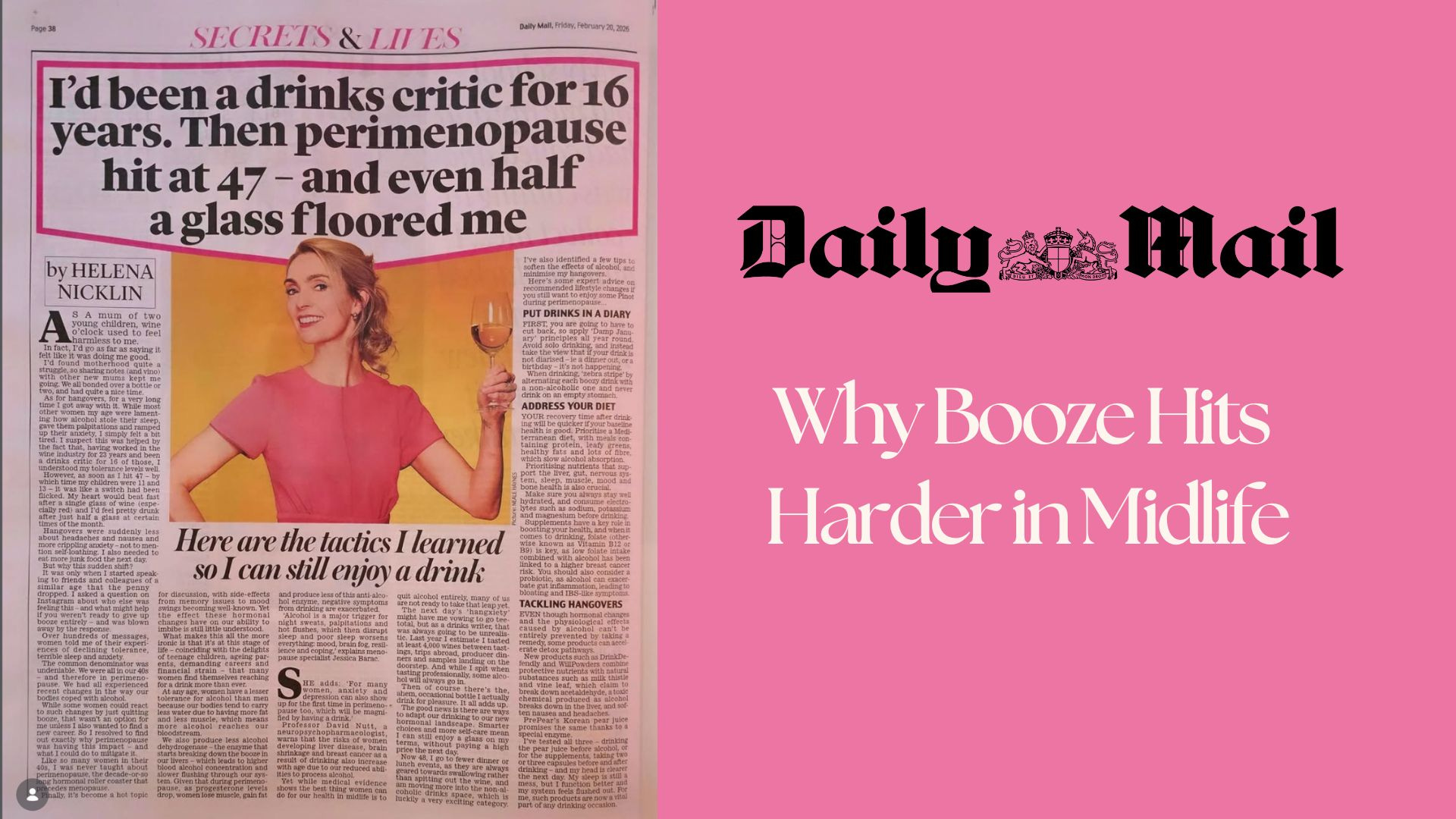
I wrote a piece for the Daily Mail last week on how perimenopause affects women’s ability to cope with alcohol and the response was overwhelming, so I thought I’d share the longer version here. Strap in because it’s scary in places - but if we are going to drink, here’s what we need to know and how we can slightly mitigate the negative effects. Keep reading if you’re male too! There’s still vital info here.
Why booze hits women harder in their 40’s
Wine o’clock used to feel harmless. As a mum with two young kids, a glass would make mealtimes manageable and bedtimes feel less like a battlefield. Another glass (or two) over dinner would then be a reward. Cut to later and many women in their forties who’ve kept up a wine habit feel something change. Even one glass means poorer sleep. Two usually adds ‘hangxiety’ and many women report faster intoxication. The question creeps in: Why can’t I handle it like I used to? The answer isn’t about weakness, it’s biology and it has a name: Perimenopause.
A Decade of Discombobulation
Many women in their forties are still in collective awe about the fact we were never taught about perimenopause: the decade-or-so long, hormonal roller coaster that just about every woman goes through (sometimes, from mid 30’s) and ends finally when our periods stop. I didn’t even know until recently that ‘the menopause’ is technically just one day in your life and it’s a full year after the last day of your last ever period, which means it has to be diagnosed retrospectively. Menopause was sold to me as something that only happened to ‘old’ women, that was embarrassing and shameful. Admitting to having had it was akin to admitting that you’re past it. At least now it’s a hot topic for discussion, though there’s still work to do getting the message out to younger women who are suffering, thinking they are going mad with no idea what’s happening to their bodies.
So, what is happening?
During this time, which tends to cruelly coincide with the delights of teenage children, ageing parents, demanding careers and financial strain, progesterone steadily declines and oestrogen fluctuates wildly, throwing up all sorts of symptoms. And while apparently one in four of us may breeze through this tumultuous period, others aren’t so lucky.
“Around 25 per cent of women find it genuinely debilitating. It can affect work, relationships and mental health at the same time that life’s pressures peak.” says menopause specialist Jessica Barac.
Why booze hits women harder in midlife
At any age, women have a lesser tolerance for alcohol than men because our bodies tend to carry less water due to having more fat and less muscle, which means more alcohol reaches our bloodstream. We also produce less alcohol dehydrogenase - the enzyme that starts breaking down the booze in our livers, which leads to higher blood alcohol concentration and slower flushing through our system. Given that during perimenopause, as progesterone levels drop, women lose muscle, gain fat and produce less of this special anti-alcohol enzyme, any negative symptoms from drinking are exacerbated as well as making menopausal symptoms worse.
It’s no wonder many of us want to reach for a drink. But while these life pressures are familiar, what’s less acknowledged is how alcohol interacts with this hormonal chaos. Spoiler: it’s not good news.
Part of the charm of that evening drink is the instant softening of stress. It’s a ritual, it’s been used for social bonding for centuries and it feels like a perfectly natural, human thing to do. Most of us understand we’re borrowing that calm from tomorrow, however, and will admit that booze also removes willpower… so we know what happens next.
“Alcohol is a major trigger for night sweats, palpitations and hot flushes, which then disrupt sleep - and poor sleep worsens everything: mood, brain fog, resilience and coping,” says Barac. “For many women, anxiety and depression can also show up for the first time in perimenopause too, which will be magnified by having a drink.”
Fantastic. And to think, many of us still have it in our heads that red wine is good for the heart. More bad news though, ladies. It’s not.
Busting the red wine health myth
The idea that red wine is good for you has now largely been debunked, sadly. Neuropsychopharmacologist Professor David Nutt, who has spent decades studying alcohol’s effects on the brain, explains that while red wine contains antioxidants such as resveratrol, the alcohol itself produces more damaging free radicals than those good compounds can counteract. These old claims that wine protects the heart are now thought to reflect diet and lifestyle rather than booze itself, so any positive effect is negligible. As Nutt puts it: “If there is a protective effect from alcohol, it’s about half a small glass of wine a day (about 60ml) - something you can’t even buy.” And even if we could, who stops there?
The scary stuff we NEED to know
Hold onto your hats, because this is grim reading, but as Professor Nutt says, “if we’re going to do it, we should at least be informed”. So here goes:
Alcohol is already the leading cause of death in men under 50 and is predicted to become the leading cause of death in women under 50 within the next couple of years. That rise in female alcohol deaths is unprecedented and this rate is rising dramatically in a relatively short period of time. This has been driven by 24-hour availability and crucially, the cultural creep of regular drinking as part of everyday life. TV shows like Desperate Housewives regularly feature glamorous women drinking wine in the afternoons, while we do the same at home and make jokes about it with friends, creating a feedback loop of normalisation. Even wine’o clock has its own hashtag. Perhaps unsurprisingly, most of the increase in alcohol consumption has come not from pubs, but from home drinking, where intake is easier to underestimate and habits can escalate quietly.
“Alcohol affects every organ in the body. If you’re not aware of its effects, you will miss the cause of many of the problems you’re trying to treat,” he says. “It accelerates brain ageing and increases dementia risk but crucially, it is also a Group 1 carcinogen - and even one to three drinks per week increases breast cancer risk, because alcohol raises oestrogen levels and promotes carcinogenic processes.”
This is one of Nutt’s most consistent warnings - and he is blunt about this: For women, there is no truly “safe” level of drinking, only levels of lower or higher risk - and those risks arrive earlier and more intensely than most people realise.
How to drink smarter
While it has become abundantly clear that the best thing for our health in midlife is to quit alcohol entirely, many of us are simply not ready to take that leap yet. After all, a bit of social drinking fosters connection, which is good for well-being. What we can do though, is take this opportunity to reevaluate how we drink and draw up new boundaries around it. Here’s some advice from the experts:
Be intentional
Apply ‘Damp January’ principles all year round: If it’s not diarised, it’s not happening. Avoid solo drinking as that’s where things creep. ‘Zebra stripe’, alternating each boozy drink with a non-alc. Start early to stop early and never drink on an empty stomach.
Keep up your baseline health
Menopause nutrition experts like Jessica Barac and Emma Bardwell agree: Focus more on baseline health during perimenopause rather than quick fix remedies. Recovery will be quicker that way. Bardwell says to prioritise a Mediterranean diet, with meals containing protein, leafy greens, healthy fats and lots of fibre, which slow alcohol absorption and stabilise blood sugar. Phytoestrogens like flaxseed and soy are good for hot flushes too.
Stay hydrated always
Barac adds to always stay well hydrated, using electrolytes such as sodium, potassium and magnesium before drinking milk thistle afterwards (never before!). Prioritising nutrients that support the liver, gut, nervous system, sleep, muscle, mood and bone health is also crucial.
The right supplements
The non-negotiables the experts recommend are magnesium glycinate to support sleep, mood, muscle tension and nervous system regulation and omega-3 fatty acids help reduce inflammation and support brain health. Vitamin D, particularly D3 taken alongside vitamin K2, plays an important role in bone strength as well as mood and creatine monohydrate is increasingly recognised for its ability to support weakening muscle and cognition in midlife. B vitamins are also important, especially folate, as low folate intake combined with alcohol has been linked to a higher breast cancer risk. Both also advise considering a good probiotic, as alcohol can exacerbate gut inflammation, leading to bloating and IBS-like symptoms.
Hangover & Protection Remedies
Even though hormonal changes and the physiological effects caused by alcohol can’t be prevented by taking a remedy, some products can accelerate detox pathways slightly and lighten hangovers. New products such as DrinkDefendly and Willpowders combine protective nutrients with natural substances like milk thistle and vine leaf that claim to break down acetaldehyde and soften hangover fog, nausea and headaches. Prepear’s Korean pear juice claims the same thanks to a special enzyme. I’ve tested all three vigorously and must admit that my head is clearer the next day. My sleep is still a mess if I’m honest but I definitely function much better and my system feels flushed out. For me, these are now a vital part of any drinking occasion.
Perimenopause has forced me to be more honest about how, when and why I drink. Smarter choices and a bit more self-care mean I can still enjoy a glass on my terms, without paying such a high price the next day. Midlife is tough enough - but it is also the perfect time to recalibrate and start properly listening to our bodies, as well as making sure we’re informed about our choices rather than sleepwalking into ill health. For me, this new knowledge has been strangely liberating and understanding alcohol’s negative effects genuinely makes me want to moderate better. So, I’ll drink to that! But make the next one Kombucha.
Has this made you want to check out some good non-alcoholic drinks? Check out this article and this one!
A truth many of us in the wine industry have figured out over midlife. Thankfully there are now quality dealcoholzied wines for substituting without losing the ritual. 🍷