


October is Georgian Wine Month and I was lucky enough to spend a few days there recently, so it’s the perfect time for a One Minute Wine Ace Guide. Want a deeper dive? Paid subscribers, stay tuned for more!
ONE MINUTE WINE ACE - GEORGIA
The country of Georgia is the original home of orange wine, or amber wine as they call it there. It’s where the oldest evidence of winemaking on the planet has been found, (dating back 8,000 years!) which is why it’s known as the cradle of winemaking. Georgia is a unique place where wine is woven into just about every element of the culture, way beyond mealtimes. You’ll find wine styles here that you just won’t find anywhere else. Here are the key things you need to know about Georgian wine:
Where is Georgia?
Georgia sits right where Eastern Europe meets Western Asia, with Russia to the north and northeast, Turkey and Armenia to the south and Azerbaijan to the southeast. The Black Sea sits on its western coast and Tbilisi is the capital city.
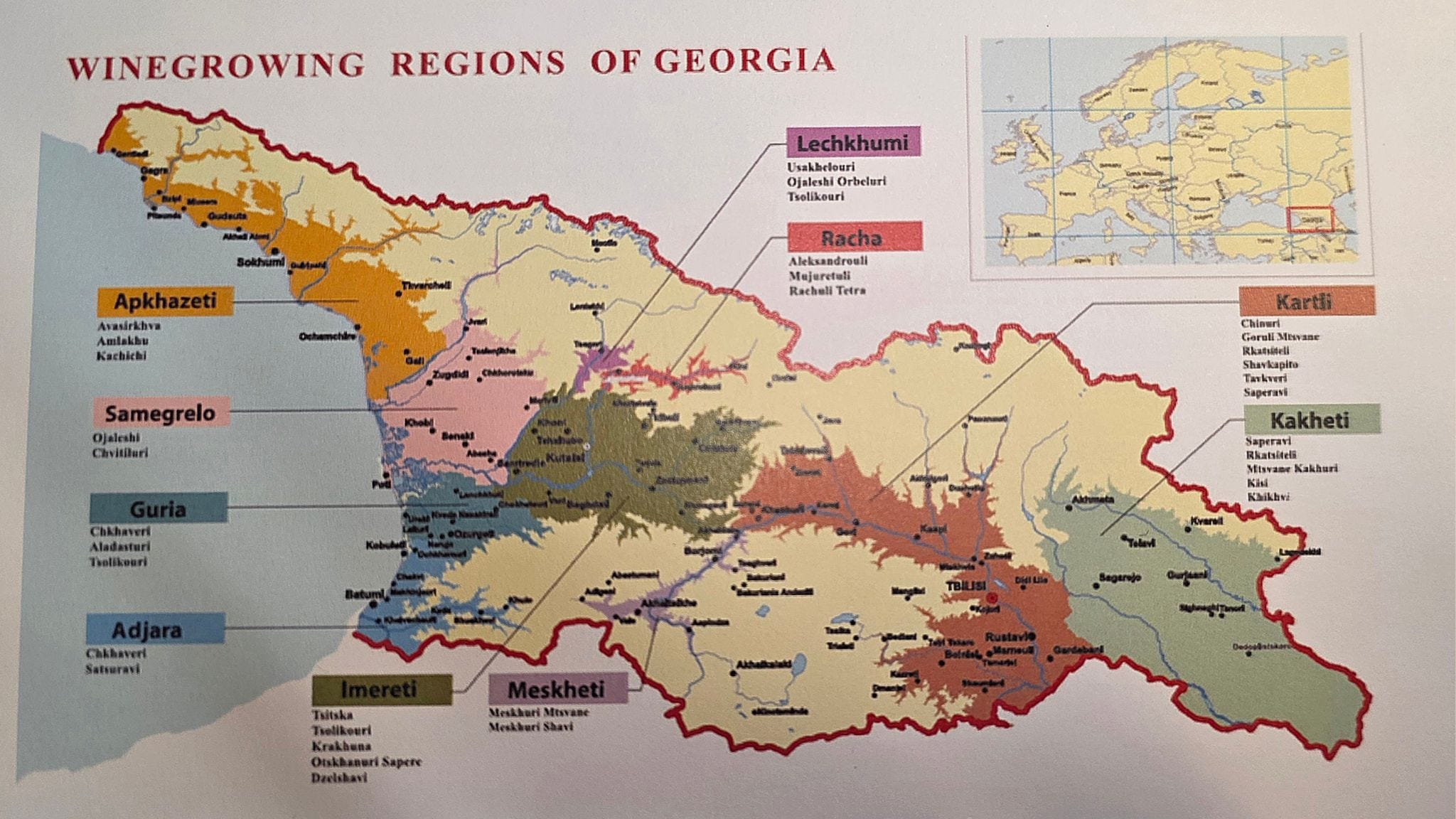
Which grapes do they use in Georgian wine?
Georgia has a whopping 525 indigenous grape varieties but only 8 have real clout and two stand out for quantity. On the red side, Saperavi leads the way for plantings and Rkatsiteli is the flagship on the white side.
What is orange or amber wine?
What we call ‘orange’ wine in the UK and elsewhere is ‘amber’ in Georgia, so if you want to sound like a pro, if it’s Georgian, call it ‘amber’. Orange wine is simply a white wine made like a red wine, where the juice is left in contact with the skins to absorb more colour and texture (see this piece for a deeper dive). This can be done in steel tanks, barrels or terracotta pots known as ‘qvevri’ in Georgia.
GEEK FACT! In Georgia, the pots which stay in the ground and never move are ‘quevri’. Amphorae are just for transportation!
Other styles of Georgian wine
While the orange (amber) wines of Georgia have finally started trending after 8,000 years, the reds and whites are well worth a taste - and you’ll find that there are two clear methods of making wine here, whether it’s red, white or amber: European-style and ‘traditional or ‘qvevri’-style. In this context, European-style winemaking generally refers to modern, temperature-controlled stainless steel tanks or oak barrels, which give winemakers much more control over skin contact and filtration than buried clay qvevri. The resulting wines are clear and bright with more fruit and less tannin than their more rustic, ‘traditional’, qvevri-aged counterparts.
The key wine regions of Georgia
Georgia currently has just under 50,000 hectares of vineyards planted, of which 87% are located in the region of Kakheti in the southeastern part of the country. 5% lie within Imereti, 5% in Kartli and 2% in Racha-Lechkumi. Less than 1% can be found scattered across the 6 other wine-producing regions: Meskheti, Guria, Adjara, Bolnisi. Samegrelo and Abkhazia.
Try These Georgian Wines
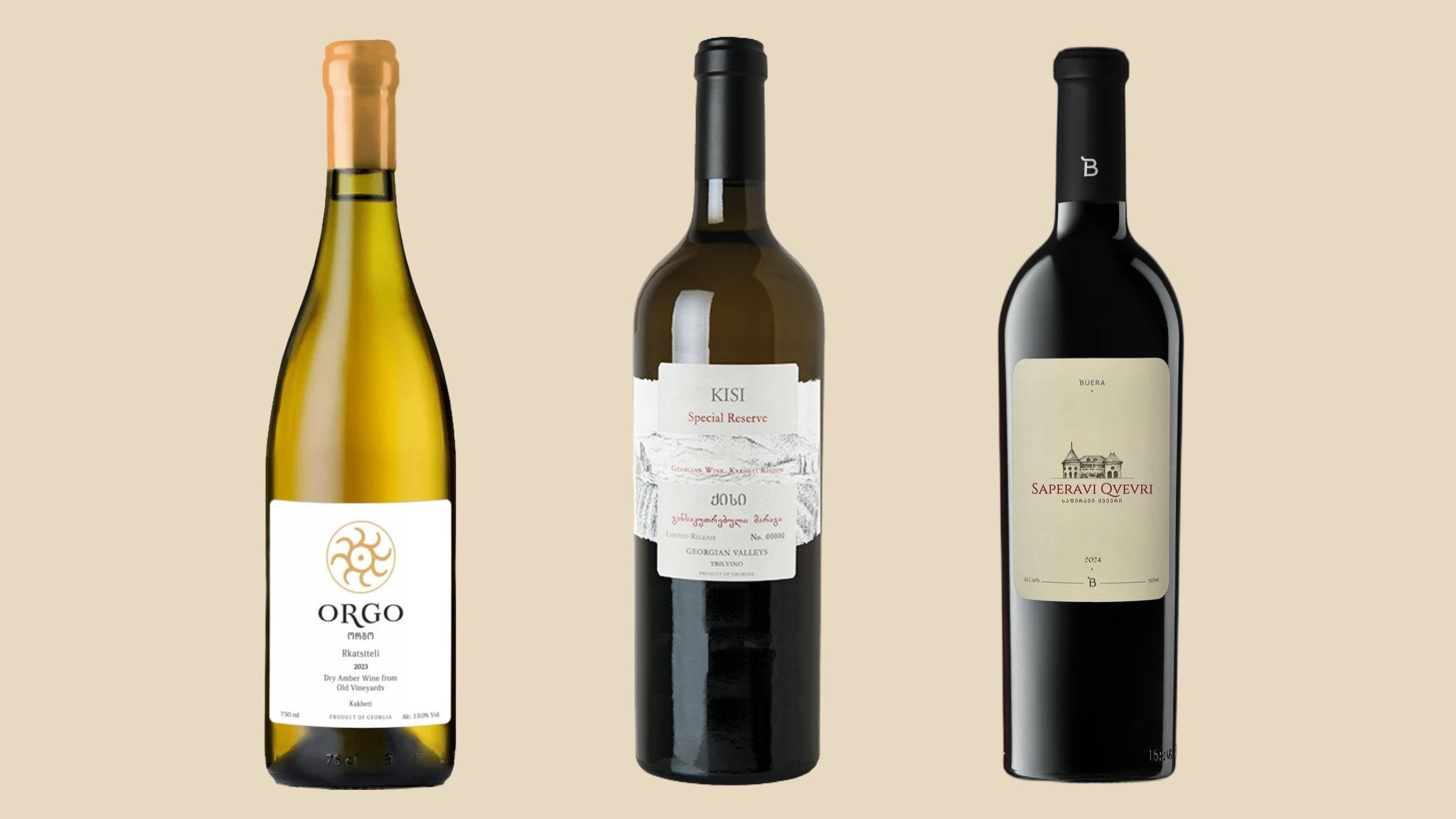
Amber: Orgo Rkatsiteli, £22.90 on offer georgian-wine.co.uk
A particularly fresh style of amber wine to start you off. Made with 100% Rkatsiteli grapes from Kakheti, this has had 6 months in qvevri with skin contact. It’s dry and textural but rounded with notes of honeyed pear and camomile.
White: Kisi Special Reserve 2023, Tbilvino, georgianwinesociety.co.uk
The charmingly named Kisi is an indigenous Georgian white grape that’s coming back from near extinction and here, it’s made in the ‘European style’ to keep its freshness. A little tropical with some ripe pear and a quirky hint of matcha, this is a great example of the grape.
Red: Château Buera Saperavi Qvevri, £26.90 georgian-wine.co.uk
A dry red wine made from 100% Saperavi grapes in the Napareuli micro-zone of Kakheti, made with wild yeasts and macerated with skins for one month in qvevri. Think dark, bramble fruit and plum with a silky texture and an earthy finish.
Want more in-depth wine wisdom, more recommendations to try, access to all my learny videos, bonus audio content and the odd giveaway? Upgrade to paid!
Like this article? Try these:
Fine Wine From Essex? Yes! Here’s Why…
